
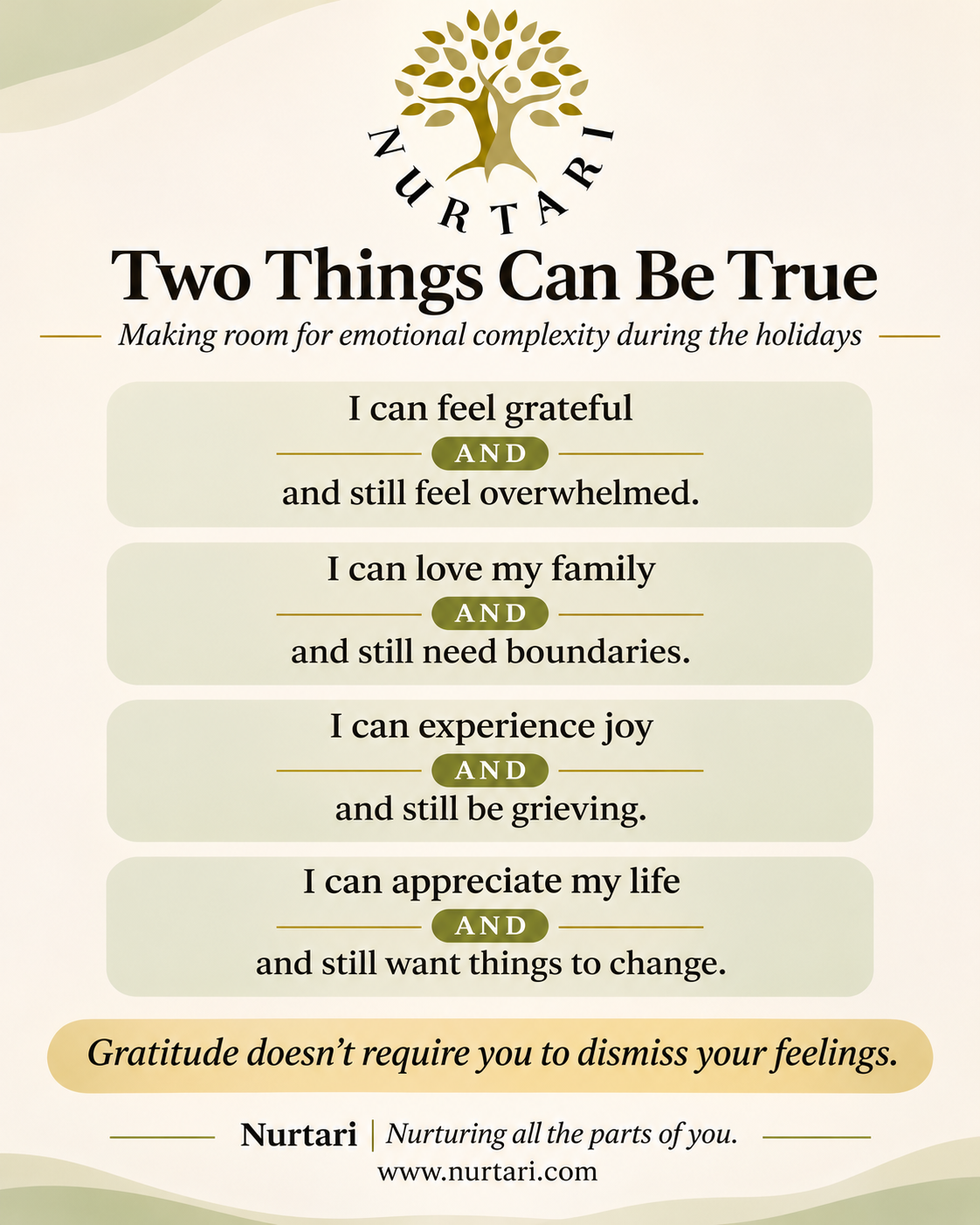
When Gratitude Feels Complicated: Making Room for All Your Emotions During the Holidays
Gratitude and grief can coexist. Learn how to navigate complicated emotions, family expectations, and holiday stress with greater self-compassion.
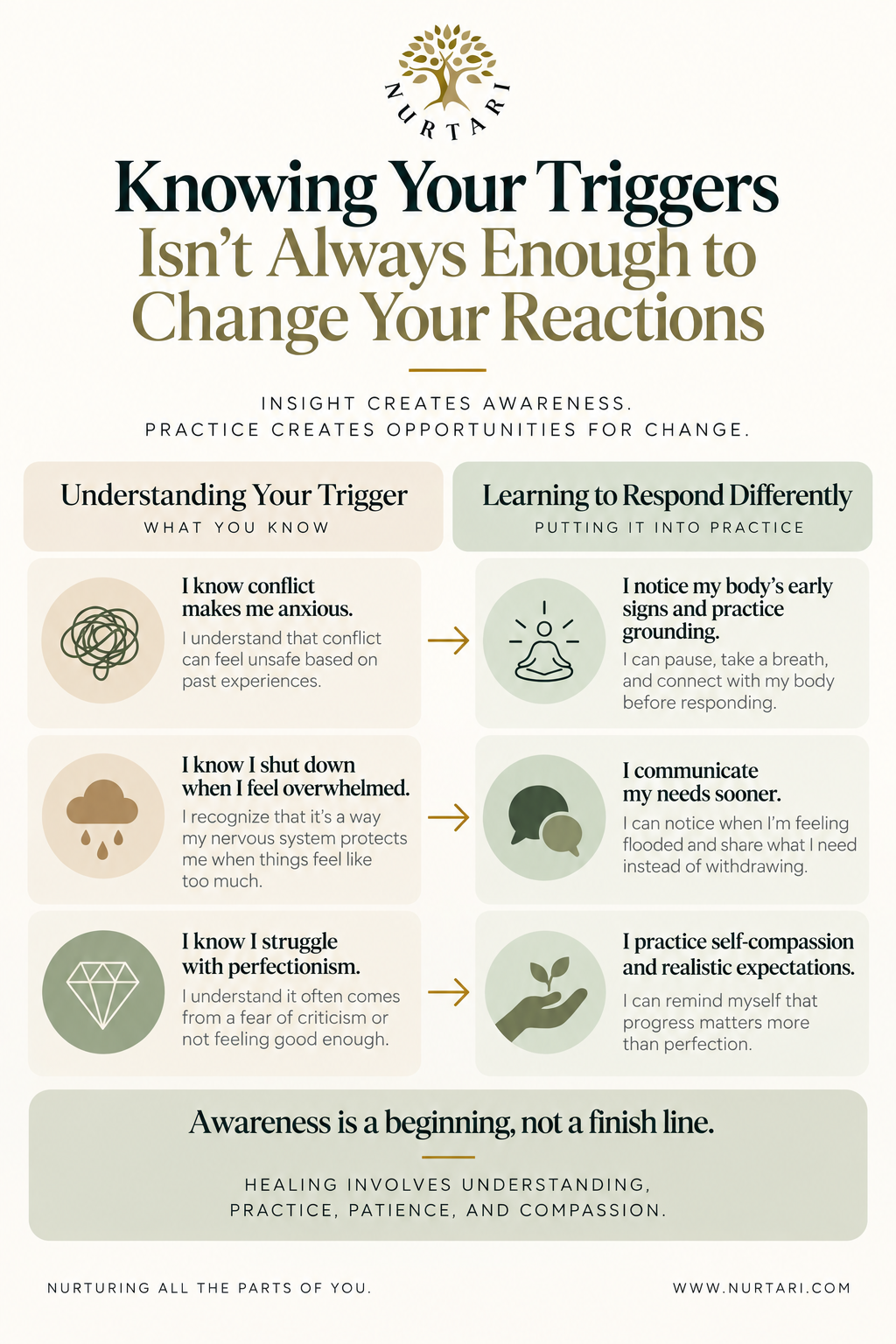
Why Knowing Your Triggers Isn't Always Enough to Change Your Reactions
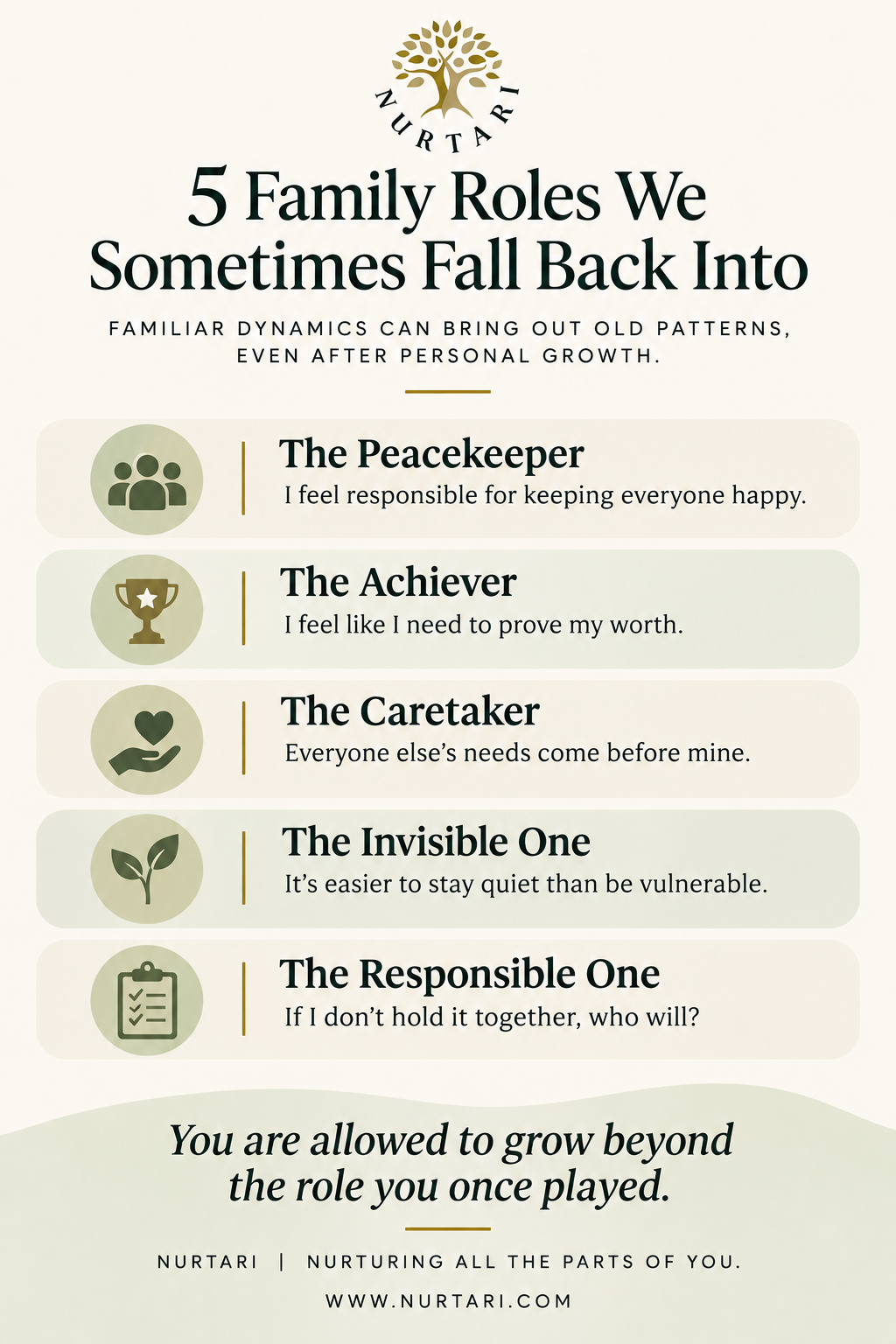
Why Being Around Family Can Bring Out an Older Version of Yourself

When “I’m Fine” Doesn’t Tell the Whole Story

Fall Mental Health: Supporting Your Nervous System Through Seasonal Change

Nurturing What’s Next: Nurtari’s New Home in Kirkwood

Caring for the Caregivers: Why High-Performing Professionals Need a Place to Exhale
High-performing professionals are often the ones everyone else depends on—but who supports them? Whether you're a clinician, healthcare provider, executive, or entrepreneur, constantly caring for others can take a quiet toll on your nervous system. Learn why therapy isn't a sign that something is wrong, but an investment in sustaining the life and work you care deeply about.

Helping Kids and Teens Thrive This Summer: Supporting Mental Health When School Is Out
Summer can bring freedom, adventure, and much-needed downtime—but for many children and teens, it can also bring unexpected challenges. Without the structure of school, some young people experience increased anxiety, loneliness, emotional overwhelm, or difficulty navigating friendships, routines, and self-esteem. In this blog, we explore common mental health concerns that arise during the summer months and practical ways parents can support their child's emotional well-being. Learn how therapy can provide a safe, supportive space for children and adolescents to build confidence, resilience, and healthy coping skills throughout the summer and beyond.

When Self-Care Feels Selfish: Why So Many of Us Struggle to Slow Down

Real Connection Matters: Why Human Care Still Leads the Way in Therapy and Nutritional Counseling

Supporting Clients on GLP-1 Medications: The Role of Integrated Therapy and Nutrition Care

When Insight Isn’t Enough: Why Somatic Therapy Changes Outcomes

Common Reasons Referrals to Dietitians Get Delayed — And Why That Matters

Eating Disorder Awareness Month: Making Space for Healing, Hope, and Whole-Person Care

Why Dieting Fails When the Nervous System Is Dysregulated — and What Trauma‑Informed Nutrition Does Instead

Why Willpower Isn’t the Problem: Trauma, the Nervous System, and Eating Struggles

Why Therapist and Dietitian Care Coordination Matters for Whole-Person Healing
At Nurtari, we believe healing is not siloed. Mental health and nutrition are deeply intertwined — emotions influence appetite and digestion, and physical nourishment impacts emotional regulation and resilience.
In our latest blog, we explore why intentional collaboration between a therapist and a registered dietitian isn’t just helpful — it’s essential for safe, effective, and sustainable care. When providers communicate and align treatment goals, clients aren’t left holding the pieces alone.
This is what it means to support Nurturing all the parts of you.

How Trauma Is Stored in the Body—and How Healing Happens
Trauma doesn’t live only in our thoughts—it’s held in the body and nervous system. This post explores how trauma is stored somatically, why we may feel stuck even when we “understand” what happened, and how body-based therapies can support lasting healing and regulation.

How Somatic Experiencing® Can Help with Symptoms of Anxiety
Anxiety is often felt in the body before it’s understood in the mind. This post explores how Somatic Experiencing®, a body-based therapeutic approach, helps support anxiety by working with the nervous system to restore regulation, safety, and resilience.

DBT Skills You Can Use Today: Simple Tools to Support Your Emotional Well-Being
Dialectical Behavior Therapy (DBT) offers simple, practical skills you can use in everyday life to calm your body, regulate emotions, and communicate more effectively. From grounding techniques to mindful decision-making, these tools help you navigate stressful moments with clarity and confidence. In this post, we break down easy DBT skills you can start using today to support your emotional well-being.